



Leadership assessments can be incredibly accurate—and still fail to improve performance. In boardrooms and portfolio company leadership teams, we see the same pattern: a validated tool produces a detailed report, a debrief happens, and then day-to-day urgency takes over. The assessment becomes “interesting,” not instrumental. The organizations that get value treat the assessment as a decision tool, not a personality profile. The goal isn’t insight; it’s better leadership outcomes, faster.
Start With the Business Problem, Not the Score Report
Assessments are often launched with a vague objective like “leadership development” or “team effectiveness.” That’s not a use case; it’s a wish. The starting point has to be the business problem the leader is on the hook to solve.
In a PE-backed environment, that problem is usually time-bound and measurable: stabilizing a newly acquired team, improving forecast accuracy, building a repeatable sales process, reducing regrettable attrition, or integrating two operating models without losing key talent. When the business context is explicit, assessment data becomes actionable. Without it, even the best tools can steer leaders toward generic improvements that don’t move EBITDA, execution, or retention.
Before selecting an instrument or scheduling a debrief, define what “better” looks like in-role. What decisions does this leader need to make faster? Where do they need to raise the bar? What behaviors are currently constraining performance? When those questions are answered, the assessment becomes a lens on fit, risk, and development priorities—not an end in itself.

Translate Traits Into On-the-Job “Moments That Matter”
Most leadership reports describe tendencies: conflict style, risk tolerance, drive, empathy, learning agility. Useful—but leaders don’t lead in tendencies. They lead in moments: a miss on a critical deliverable, a pricing decision, a tough performance conversation, an integration announcement, a leadership team disagreement.
The practical gap is translation. If the report says a leader under-communicates under pressure, what does that mean during a product recall, a plant outage, or a customer escalation? If a leader’s style is highly independent, how does that show up when they need cross-functional alignment to hit a growth plan? If a leader values harmony, what happens when they must hold a peer accountable for underperformance?
At 29Bison, we push assessment findings into a short set of “moments that matter” tied to the role and operating context. That allows the leader and stakeholders to anticipate predictable failure modes, choose compensating tactics, and design support. The focus shifts from who someone is to what the business will experience when pressure hits.
Use Assessments as a System, Not an Event
The most common failure isn’t misinterpretation—it’s isolation. A debrief is scheduled, insights are shared, and the work stops there. Sustainable change requires a system around the data.
That system includes sponsorship and accountability. The leader needs alignment with the CEO, board, or sponsor on which two or three shifts matter most right now. It includes reinforcement in the operating rhythm, where leadership behaviors are revisited in the same cadence as performance: weekly priorities, monthly reviews, quarterly business updates. It includes real feedback loops, so the leader gets evidence that a change is working or not working.
It also means integrating the assessment into adjacent people processes. If the assessment surfaces a gap in delegation, then the leader’s goals, team structure, and decision rights should reflect it. If the data indicates a pattern of over-control, then the leadership team needs clarity on what decisions the leader will stop owning. If the report shows a risk around talent development, the performance management and succession expectations should be explicit.
When the assessment is embedded in how the organization runs—rather than treated as a standalone exercise—it becomes a lever for execution.
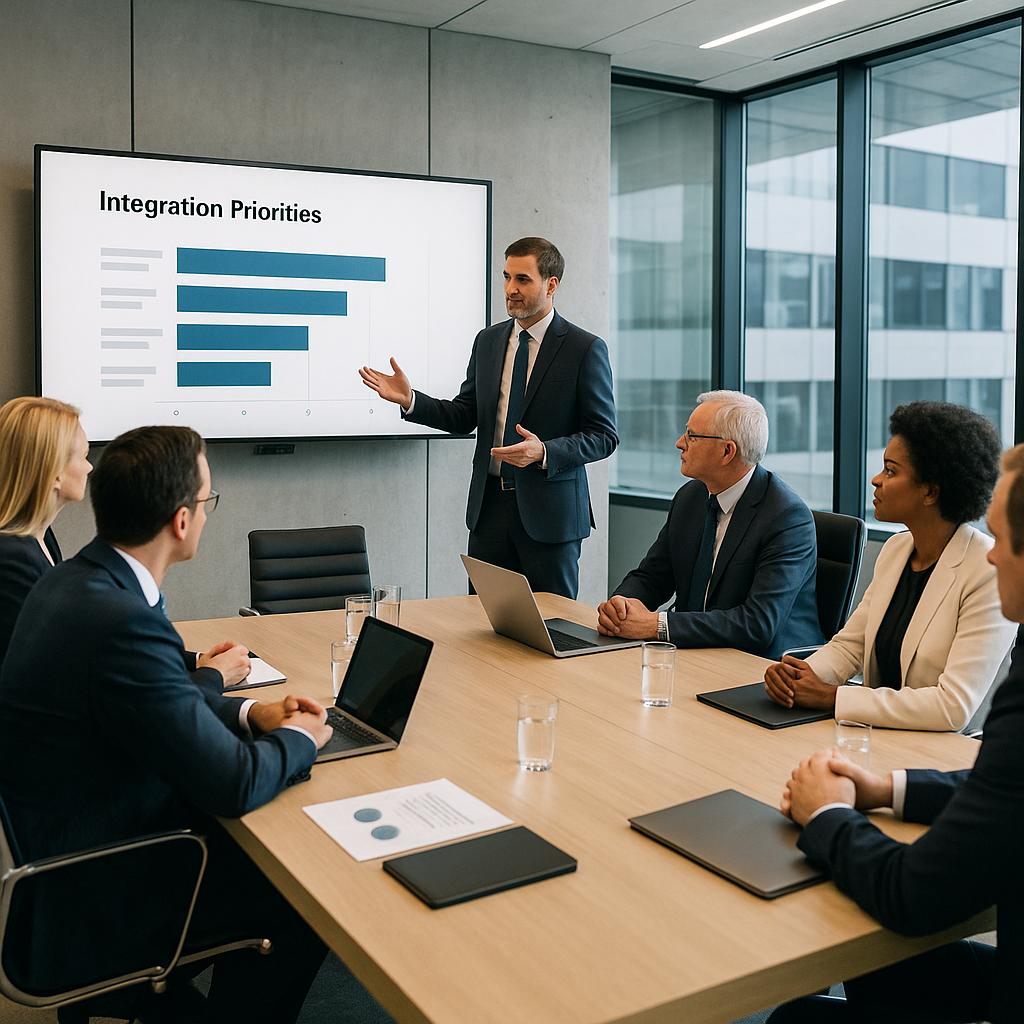
In Transactions, Assess for Integration Risk and Leadership Capacity
In M&A and high-change environments, the question isn’t “Is this leader capable?” It’s “Is this leader capable under these conditions, at this speed, with this much ambiguity?” Assessments can be powerful here, but only when interpreted through the realities of integration and scale.
Post-close, leaders are navigating overlapping systems, inconsistent norms, and elevated uncertainty. Even strong leaders can stumble if they don’t have the capacity for rapid decision-making, change leadership, and talent retention. Assessment data can identify where the integration load will break down: communication patterns that erode trust, conflict avoidance that slows decisions, risk profiles that lead to over-caution or overreach.
Used well, the assessment informs integration planning and leadership deployment. It can guide where to add air cover, where to pair leaders for complementary strengths, where to tighten governance, and where to make faster role changes. It also improves the quality of coaching by making it specific to the integration realities, not generic leadership advice.
The payoff is speed with fewer people surprises. And in a value-creation plan, fewer surprises is an advantage.
Leadership assessments are not magic, but they are meaningful when they’re anchored to the business problem, translated into real operating moments, and supported by a system that drives follow-through. When you treat assessment data as a leadership decision tool—connected to role demands, performance expectations, and organizational cadence—you stop collecting reports and start building measurable leadership capacity.
Why 29Bison?
Choosing the right partner for HR due diligence and integration is critical to the success of any transaction, and 29Bison offers unmatched expertise and support in navigating these complexities. With a people-first approach, we go beyond traditional due diligence to address not only workforce-related risks but also opportunities that drive long-term value creation. Our comprehensive HR due diligence services uncover hidden risks, optimize workforce strategies, and identify synergies that align with your strategic objectives. Post-transaction, we provide tailored HR integration solutions designed to foster a seamless transition, retain key talent, and build a cohesive organizational culture that supports sustainable growth. And finally, 29Bison's Fractional HR Operating Partner service provides private equity firms with strategic, high-impact HR leadership, driving value creation, talent optimization, and seamless workforce integration across portfolio companies.
At 29Bison, we're more than human capital consultants—we're partners invested in helping you achieve your vision by maximizing the potential of your most valuable asset: your people. Let us help you turn challenges into opportunities and create a solid foundation for success. Reach out today to learn how we can support your HR diligence and integration needs.