



Human capital due diligence is no longer a “nice-to-have” workstream in middle market transactions—it’s the difference between underwriting confidence and post-close surprises. In 2026, private equity teams are moving faster, asking sharper questions, and demanding diligence that translates directly into deal risk quantification and an executable post-merger integration plan. The best diligence doesn’t just identify people issues; it connects workforce realities to EBITDA, cash flow, and the operating model you intend to build.
Why PE underwriting now depends on workforce truth
In financial sponsor deals, the workforce is often the largest controllable cost—and the most common source of operational drag. Yet many deal teams still rely on surface-level HR materials that were prepared for a sale process, not for decision-grade underwriting. In today’s environment, lenders, insurers, and investment committees increasingly expect evidence that workforce risks have been identified, quantified, and actively managed.
For middle market transactions, the risks are rarely exotic. They’re practical and recurring: misclassified employees creating back-wage exposure, benefit plans that are richer than the model assumes, concentrated institutional knowledge with no retention plan, or a sales compensation structure that drives revenue volatility. Human capital due diligence brings these issues into the light early enough to renegotiate, restructure, or plan around them—rather than paying for them after close.
At 29Bison, we see diligence teams win when they treat people data the same way they treat financials: reconcile it, test it, and pressure-check assumptions. That means connecting workforce findings to the investment thesis, not filing them as “HR notes.”

What “good” HR due diligence services actually test
High-impact HR due diligence services go beyond a document request list. They validate whether the company can execute the growth plan with the workforce it has—and whether the buyer inherits liabilities that should be priced, escrowed, or remediated immediately.
A diligence lens that serves M&A due diligence and sponsor underwriting typically includes workforce structure and cost, compliance and hidden liabilities, leadership depth, and the operating environment that shapes retention. Workforce structure starts with a clean census and organizational map: headcount by function, location, exemption status, tenure, span of control, and true fully loaded cost. The goal is to reconcile people cost to the P&L, identify where costs sit below the line, and surface anomalies like heavy contractor reliance or “non-recurring” labor that is actually recurring.
Compliance diligence should assess wage and hour risk, contractor classification, I-9 practices, leave administration, and the maturity of basic HR controls. Many targets operate with informal processes that “worked” under founder oversight but won’t withstand a scaled operating cadence. Benefit plan review is another frequent value lever: the plan design, employer contributions, participation, and renewal timing can materially change cash needs in year one.
Finally, capability assessment matters. If the investment thesis requires pricing discipline, improved sales execution, or a new plant shift, the diligence team needs an informed view of management effectiveness, frontline supervisor strength, and HR infrastructure. When that capability is missing, the right answer is not simply “hire later.” The right answer is an integration plan with ownership, timeline, and costs.
Deal risk quantification: translating findings into dollars and terms
Diligence findings only influence outcomes when they’re translated into decision-ready economics and deal actions. In practice, deal risk quantification means attaching a credible range to each major issue, clarifying timing, and identifying who bears the cost.
Some exposures are inherently quantifiable. Misclassification can be modeled using overtime estimates, potential penalties, and a reasonable lookback. Benefits can be quantified through projected employer premiums under the buyer’s plan or expected renewals under the seller’s plan. Turnover risk can be estimated by identifying key roles, replacement cost, time-to-productivity impact, and the probability-weighted cost of disruption. Compensation structures can be tested against performance and margin outcomes, especially in sales, operations incentives, and executive arrangements.
Other findings require disciplined scenario thinking rather than false precision. Cultural fragmentation, leadership gaps, and change fatigue can still be quantified through operational proxies: backlog slippage, quality escapes, safety incidents, customer churn, and missed hiring targets. The point is to connect people risk to measurable value erosion or delayed value creation.
For PE teams, this is where diligence becomes a negotiating tool. Quantified items inform purchase price adjustments, reps and warranties focus, escrows, or specific covenants. They also inform whether the deal model needs to carry one-time remediation costs, incremental HR headcount, or retention packages. The more directly diligence connects to the investment committee narrative, the faster the team can align on go/no-go and the fewer “surprises” appear in the first 100 days.
Bridging diligence to post-merger integration planning
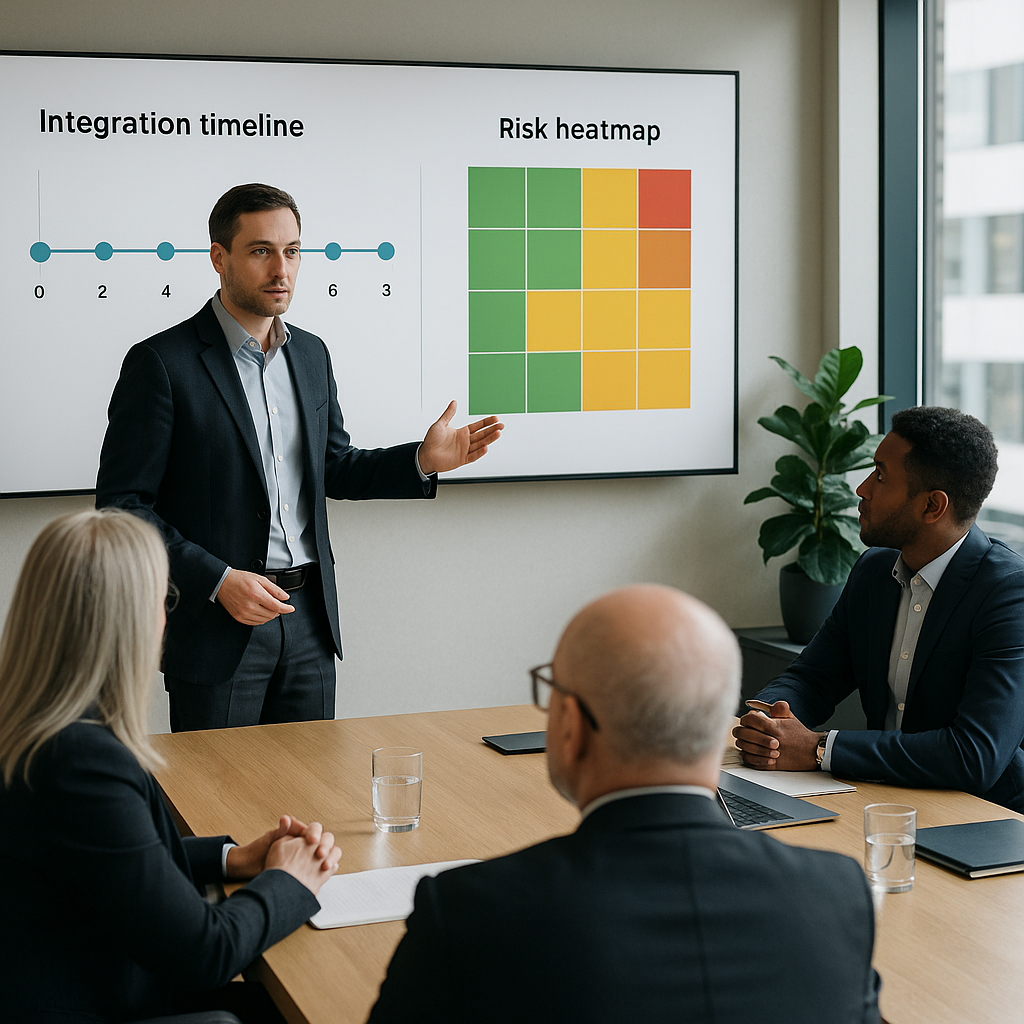
The real test of human capital due diligence is whether it shortens the path from close to value creation. In 2026, leading operating partners expect diligence outputs that can be dropped into a post-merger integration workplan with minimal translation.
That starts with identifying which people items are Day 1 critical versus Day 30–100 stabilization versus longer-term transformation. Day 1 requirements tend to include payroll continuity, benefits and leave administration, employment agreements, manager communication, and risk containment around compliance gaps. Stabilization work often involves role clarity, org design adjustments, retention actions for key performers, and establishing an operating cadence for performance management and workforce planning. Transformation includes upgrading HR systems, redesigning comp plans, building talent pipelines, and aligning culture to the sponsor’s operating model.
Diligence should also define decision ownership. If the target has limited HR infrastructure, integration must account for who will run core HR operations immediately after close—whether that’s a fractional HR leader, a dedicated integration resource, or a shared services model. When ownership is unclear, integration drifts, managers improvise, and attrition rises.
Finally, integration planning needs a communications strategy rooted in workforce reality. Employees interpret a transaction through the lens of job security, manager credibility, and how changes affect pay and workload. Diligence interviews and data review should inform the story leaders tell, the questions they must anticipate, and the commitments they can responsibly make.
What sponsors should demand in 2026
Human capital due diligence is most valuable when it is integrated into the core deal process, not run as a parallel HR exercise. Sponsors should expect diligence that reconciles workforce cost to the financials, identifies and sizes HR liabilities, and clearly links risks to purchase terms and integration actions. In middle market transactions, speed matters—but so does accuracy. The firms that win will be the ones that use HR due diligence services to turn people risk into an underwriting advantage and to enter post-merger integration with a plan that operators can execute on day one.
Why 29Bison?
Choosing the right partner for HR due diligence and integration is critical to the success of any transaction, and 29Bison offers unmatched expertise and support in navigating these complexities. With a people-first approach, we go beyond traditional due diligence to address not only workforce-related risks but also opportunities that drive long-term value creation. Our comprehensive HR due diligence services uncover hidden risks, optimize workforce strategies, and identify synergies that align with your strategic objectives. Post-transaction, we provide tailored HR integration solutions designed to foster a seamless transition, retain key talent, and build a cohesive organizational culture that supports sustainable growth. And finally, 29Bison's Fractional HR Operating Partner service provides private equity firms with strategic, high-impact HR leadership, driving value creation, talent optimization, and seamless workforce integration across portfolio companies.
At 29Bison, we're more than human capital consultants—we're partners invested in helping you achieve your vision by maximizing the potential of your most valuable asset: your people. Let us help you turn challenges into opportunities and create a solid foundation for success. Reach out today to learn how we can support your HR diligence and integration needs.