


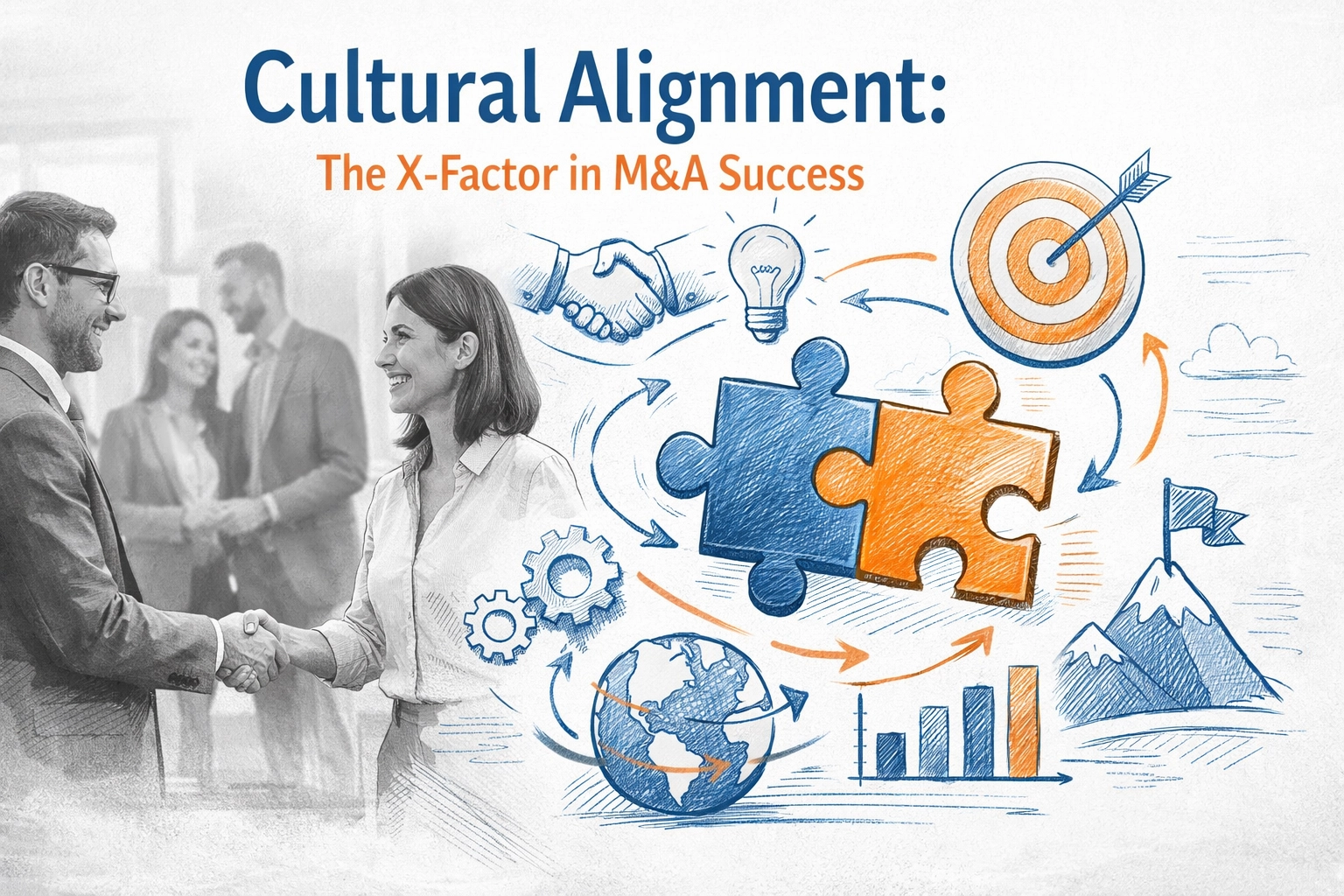
Financial models can project synergies down to the decimal point. Operations teams can map every process integration. Legal can draft ironclad transaction documents. Yet when the deal closes and two organizations attempt to function as one, culture often determines whether those projections become reality or remain wishful thinking on a PowerPoint slide.
The statistics reveal an uncomfortable truth: between 70% and 90% of M&A transactions fail to deliver expected value. While multiple factors contribute to this dismal track record, cultural misalignment consistently emerges as one of the most significant: and most overlooked: value destroyers in middle market deals.
The Hidden Cost of Cultural Negligence
Culture isn't a soft HR issue to address after integration. It's a fundamental operating system that dictates how decisions get made, how teams communicate, and how conflicts get resolved. When two incompatible operating systems collide, the resulting friction manifests in concrete, measurable ways.
Productivity stalls as employees struggle to navigate conflicting priorities and unwritten rules. Strategic initiatives bog down when leadership teams approach problem-solving from fundamentally different frameworks. Key talent exits when their working environment suddenly becomes unrecognizable. Customers sense the internal chaos and begin questioning whether their vendor can still deliver.

Organizations that effectively manage cultural integration are approximately 50% more likely to meet or exceed their synergy targets. This isn't correlation: it's causation. Culture directly impacts the speed and effectiveness of integration, which in turn determines whether projected returns materialize within the expected timeframe.
Understanding Cultural Friction Points
Cultural clashes don't announce themselves during diligence. They emerge gradually after close, often in ways that seem trivial until they compound into serious integration obstacles. One organization operates with rapid, top-down decision-making. The acquired company expects collaborative input across multiple levels before any significant decision. Both approaches have merit, but combined without intentional alignment, they create paralysis.
Leadership styles represent another common friction point. A founder-led middle market company might have an entrepreneurial, shoot-from-the-hip culture where speed trumps process. If acquired by a portfolio company with established governance protocols, the cultural whiplash can be severe. Neither culture is wrong, but the mismatch creates real operational consequences.
Communication norms, accountability structures, and approaches to innovation all carry similar risks. The acquiring company that values formal documentation meets the target that runs on informal relationships and institutional knowledge. The process-driven buyer integrates a results-oriented seller where how you achieve goals matters less than whether you achieve them.
Cultural Assessment as Strategic Diligence
Cultural due diligence deserves the same rigor as financial and operational assessments. This requires moving beyond surface-level observations during management presentations. Effective cultural evaluation examines how work actually gets done, not how leadership describes it getting done.
Understanding employee experience provides critical insight into cultural reality. Surveys and interviews with team members across levels reveal whether stated values align with daily operations. Site visits during normal business hours: not carefully orchestrated facility tours: expose authentic working environments and interaction patterns.
Leadership capabilities assessment identifies not just technical competence but adaptability to changing expectations. Middle market leaders often wear multiple hats and operate with significant autonomy. Post-transaction, those same leaders may need to embrace new reporting structures, governance requirements, and decision-making frameworks. Their willingness and ability to make that transition directly impacts integration success.
Management adaptability extends beyond the C-suite. Departmental leaders and functional managers execute integration on the ground. Their capacity to navigate ambiguity, communicate effectively during uncertainty, and maintain team cohesion while structures shift determines whether day-to-day operations continue smoothly or deteriorate during integration.
Post Merger Integration HR: Where Strategy Meets Execution

Post merger integration hr transforms cultural assessment insights into actionable integration plans. This involves establishing a cultural baseline that identifies common strengths and potential friction points without declaring one culture superior. The goal isn't cultural dominance: it's intentional cultural design that serves the combined organization's strategic objectives.
Prioritizing cultural aspirations requires articulating the desired future state explicitly. Integration teams must answer: What culture do we need to achieve our strategic goals? Which elements from each organization support that vision? What new cultural attributes must we build? These decisions should inform all other integration initiatives, from communications strategies to organizational design choices.
Communication approaches during integration reveal much about whether cultural alignment is genuinely prioritized. Bidirectional dialogue: not just top-down announcements: demonstrates respect for both organizations and creates opportunities to address concerns before they metastasize into serious morale issues. Employees across both entities need to understand not just what is changing, but why those changes serve a compelling strategic purpose.
Retention strategies for key talent must address cultural concerns proactively. Financial incentives matter, but employees also need confidence that the merged organization will provide a work environment where they can thrive. This requires honest conversations about how roles, responsibilities, and working styles may evolve, combined with genuine commitment to preserve the cultural elements that made both organizations successful.
Making Culture a Strategic Priority
Cultural alignment doesn't happen through passive hope that everyone will eventually figure it out. It requires intentional leadership attention, dedicated resources, and integration into all other transaction workstreams. Organizations that treat culture as a strategic integration priority from the very beginning of the deal process position themselves for significantly better outcomes.
Integration teams should include HR and culture expertise at the same level as finance and operations. Cultural integration milestones deserve the same rigor and accountability as financial synergy targets. Leadership behaviors must model the desired future culture consistently, especially during the inevitable challenges that arise during integration.

Middle market transactions present unique cultural challenges. These organizations often lack the formal HR infrastructure and change management capabilities of larger enterprises. Culture may be deeply tied to founders or long-tenured leaders. Employees may have limited exposure to working within larger corporate structures. These dynamics require specialized approaches that recognize middle market realities while still maintaining integration discipline.
The firms that consistently achieve successful integrations don't treat culture as an afterthought to address once financial and operational priorities are handled. They recognize that culture determines whether those financial and operational initiatives can be executed effectively in the first place.
Building Integration Capabilities
29Bison provides comprehensive cultural assessment and post-transaction integration services designed specifically for middle market transactions. Our approach combines rigorous evaluation of cultural compatibility during diligence with practical integration planning and execution support post-close.
We assess employee experience across all organizational levels to understand cultural reality beyond leadership perspectives. Our leadership and management evaluations identify not just current capabilities but adaptability to evolving requirements. This enables acquirers to make informed decisions about retention, development, and organizational design before integration challenges emerge.
Our integration support extends from developing cultural alignment strategies through execution coaching for leadership teams navigating complex change. We help portfolio companies establish the communication frameworks, change management processes, and HR infrastructure required to integrate successfully while maintaining operational continuity.
Cultural alignment isn't about eliminating differences: it's about intentionally designing the culture required to achieve strategic objectives. When approached with the same discipline as financial and operational integration, culture transforms from a deal risk into a sustainable competitive advantage. Learn more about how our cultural assessment services can support your next transaction.