


The HR red flags that most often change a deal are employee misclassification, incomplete I-9 records, misused independent contractors, inconsistent timekeeping, HR systems with no history, union obligations, outdated handbooks and missed federal contractor requirements. None of them shows up in the financials, and all of them can turn into back pay, penalties or a slower integration. Each one below comes from a real 29Bison diligence report, anonymized as our free sample report, with what it means for a buyer and what to do about it.
What counts as an HR red flag in due diligence?
An HR red flag is a finding about the target's workforce or employment practices that creates a liability, a cost or an integration problem the buyer will inherit. In our reports, each one is rated high, medium or low risk and given a timing: fix before close, in the first 30 days, or in the first 90 days.
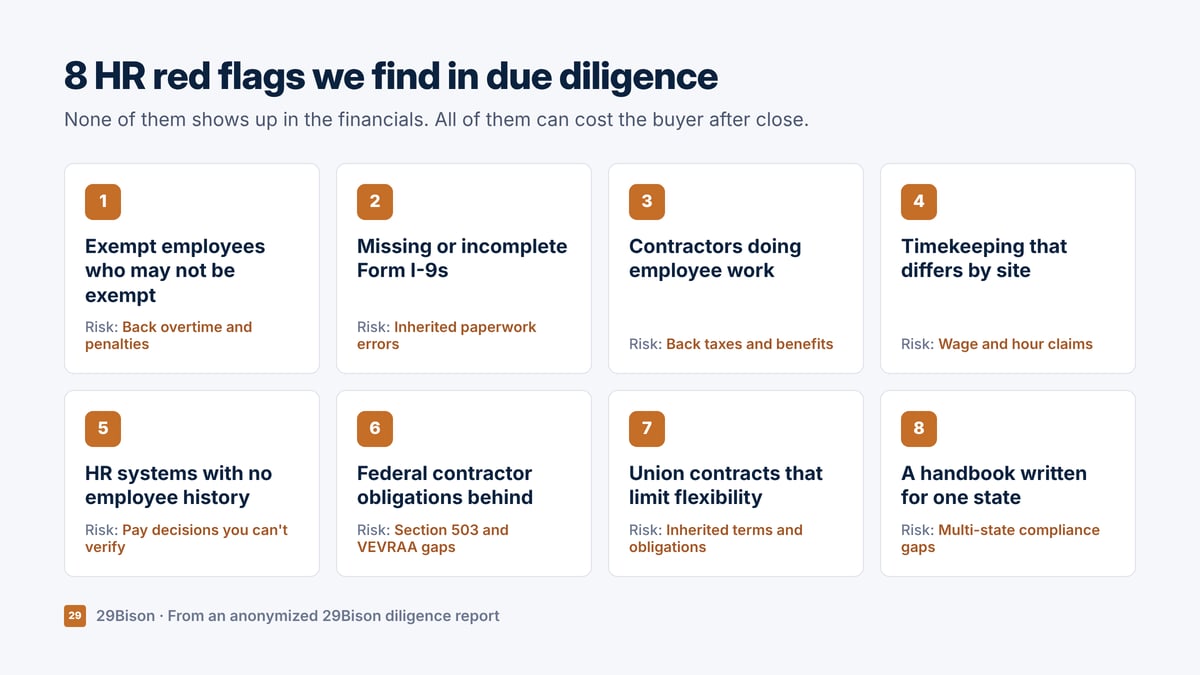
1. Exempt employees who may not be exempt
What we see: Employees classified as exempt from overtime whose pay or duties don't meet the test, often because a state sets a higher salary threshold than federal law.
Why it matters: Misclassified employees can claim unpaid overtime going back years, plus penalties and related tax and benefit corrections.
What to do: Map every exempt role against federal and state salary and duties tests before close. Estimate back-pay exposure and decide whether it belongs in the purchase agreement.
2. Missing or incomplete Form I-9s
What we see: Gaps in Form I-9 records and inconsistent use of E-Verify.
Why it matters: A buyer that keeps the target's employees can treat their existing I-9s as its own, which means it also takes on any errors in them. Paperwork penalties are assessed per form.
What to do: Audit a sample of I-9s before close. If the error rate is high, choose between correcting the forms and completing new ones for all employees at close.
3. Independent contractors doing employee work
What we see: 1099 contractors who work like employees, with no clear contracts, or with weak tracking of who is a contractor and why.
Why it matters: Misclassified contractors can bring back taxes, unpaid benefits, overtime claims and reporting penalties. The problem spreads if the platform copies the target's practices.
What to do: List every contractor with scope, rate and tenure. Convert or restructure the high-risk relationships in the first 90 days.
4. Timekeeping that differs from site to site
What we see: Hours reported by text, phone call or spreadsheet, with each location doing it differently.
Why it matters: Without consistent, auditable time records, it's hard to prove employees were paid correctly, which is a weak position in any wage and hour claim.
What to do: Standardize timekeeping rules right away and put a single system on the 120-day roadmap.
See how these findings look in a finished report. Our free sample HR due diligence report shows every finding rated by risk and timing, plus a 120-day integration roadmap.
5. HR systems with no employee history
What we see: An HR system that stores only current records, so pay changes, promotions and transfers aren't tracked over time. Payroll may run in-house with manual time entry.
Why it matters: You can't check pay decisions, defend them in an audit, or report on the workforce easily after close.
What to do: Preserve historical payroll and personnel data before close. Plan the move to a system that keeps a full audit trail.
6. Federal contractor obligations that have fallen behind
What we see: A federal contractor whose affirmative action plans and related compliance work haven't been kept up to date.
Why it matters: The federal rules changed in 2025 and 2026. Race- and sex-based affirmative action plans are no longer required, but covered contractors still have affirmative action obligations for protected veterans (VEVRAA) and individuals with disabilities (Section 503). A target that let all of its plans lapse may be out of compliance with the parts that still apply.
What to do: Confirm federal contractor status and contract values, then check that current Section 503 and VEVRAA requirements are met. Involve counsel where the target's status is unclear.
7. Union contracts that limit flexibility
What we see: One or more collective bargaining agreements covering part of the workforce.
Why it matters: Union contracts set pay, benefits and work rules the buyer inherits. They can limit integration changes and carry pension or benefit obligations.
What to do: Review each agreement's terms, expiration dates, open grievances and any benefit plan obligations before signing. Plan integration around what the contracts allow.
8. A handbook that doesn't match where people work
What we see: A handbook written for one state that misses the paid leave, wage and hour and pay practice rules of other states where employees work. In our sample, the handbook was scored against 45 compliance items.
Why it matters: Outdated policies create compliance gaps and make employment practices harder to defend.
What to do: Fix the highest-risk policy gaps in the first 30 days, then bring the handbook in line with the platform's standards.
What should a buyer do with these findings?
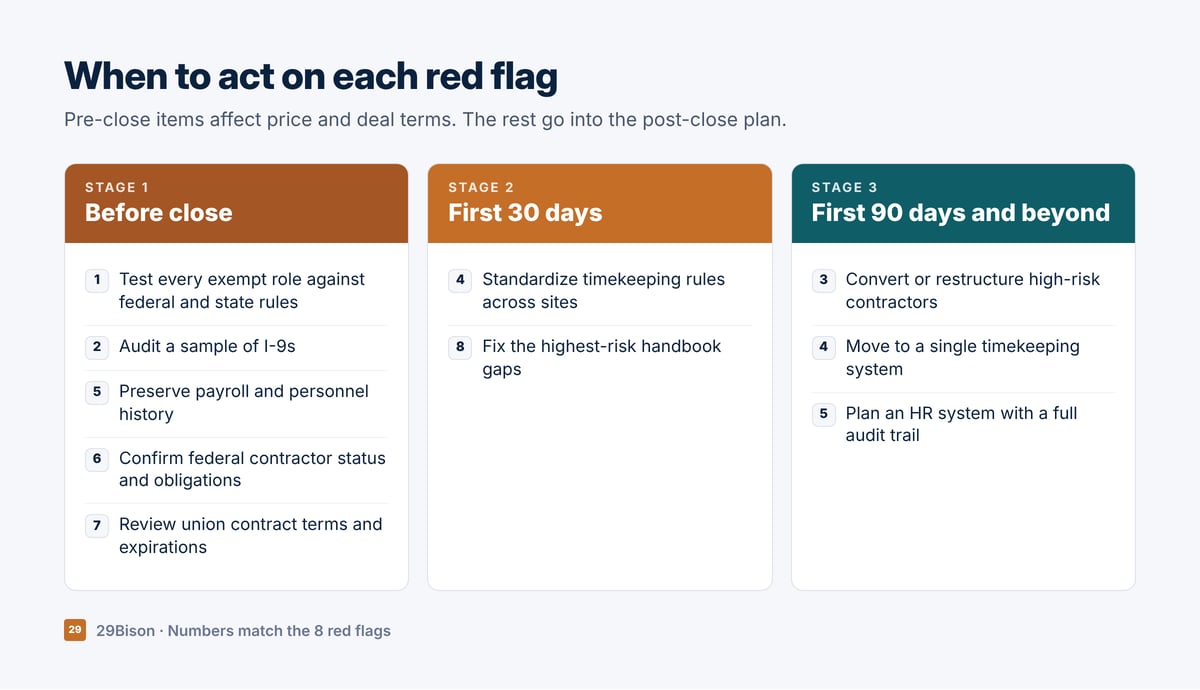
Sort them by risk and timing. High-risk, pre-close items affect price and deal terms, so quantify them before signing. See How to Quantify HR Liabilities in M&A Deals. The rest go into a post-close plan with owners and deadlines. See How to Turn HR Due Diligence Into a 100-Day Plan.
For a walk-through of every section of the report, read What's in a Human Capital Diligence Report.
See the full sample report
Every red flag above comes from one anonymized 29Bison report prepared for a private equity sponsor. The full sample shows how each finding is rated and fixed, along with a 120-day integration roadmap, a benefits summary, workforce analysis and a scored handbook review.
Get the free Sample HR Due Diligence Report
Frequently asked questions
What are the most common HR red flags in due diligence?
The most common are exempt employees who don't meet the exemption tests, incomplete I-9 records, misclassified independent contractors, inconsistent timekeeping, HR systems with no employee history, union obligations and outdated handbooks.
Can HR due diligence findings change the purchase price?
Yes. Quantified liabilities such as back overtime, misclassification penalties or change-of-control payments are often handled through price adjustments, indemnities or escrows.
Does a buyer inherit the target company's I-9 problems?
It can. A buyer that keeps the target's employees may treat their existing Form I-9s as its own, which means it also takes on any errors in them.
Do federal contractors still need affirmative action plans?
Race- and sex-based affirmative action plans are no longer required. Covered federal contractors still have affirmative action obligations for protected veterans under VEVRAA and for individuals with disabilities under Section 503.
Where can I see a sample HR due diligence report?
29Bison offers a free, anonymized sample HR due diligence report prepared for a private equity sponsor, with risk-rated findings and a 120-day integration roadmap.
Why 29Bison?
29Bison works with private equity sponsors and acquirers on the people side of a deal. Before close, our HR due diligence reviews 150+ human capital risk items and ties each finding to your investment thesis. After close, we turn those findings into an integration plan, and our Fractional HR Operating Partners lead HR across portfolio companies.
Have a deal underway? Email contactus@29bison.com to talk through your target.